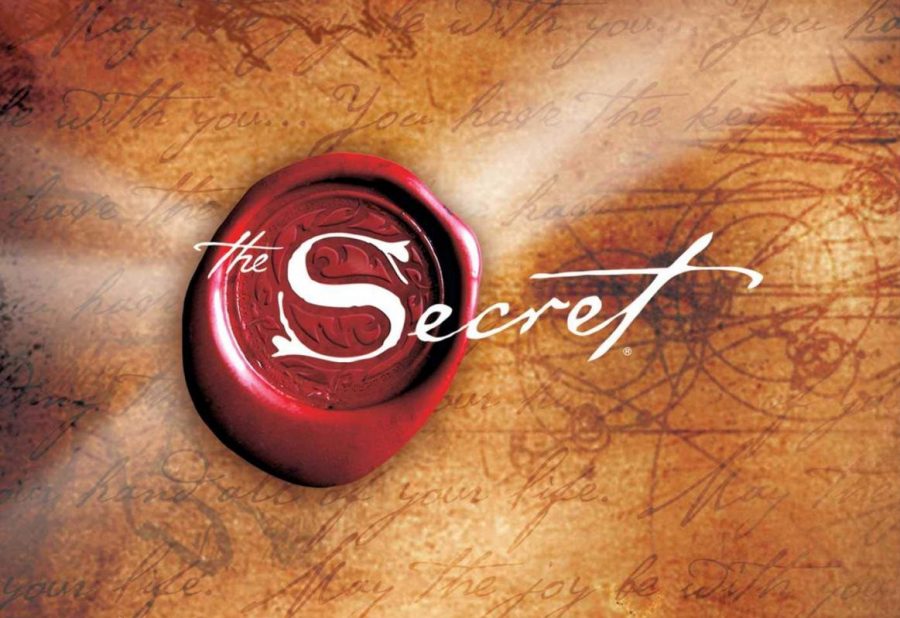
The notion discussed in Rhonda Byrne’s best-seller The Secret, one of the books that sparked heated debate worldwide over the past few years, is in fact an ancient concept revived for modern readers. It captured the interest of millions, both proponents and critics alike.
Some critics accused the book of promoting atheism. But have you ever related The Law of Attraction in an Islamic context?
A quote from the book reads:
“What you think about, you bring about.”
This perfectly summarizes the essence of the Law of Attraction, referred to by the authors of The Secret as “the most powerful law in the universe.”
The book was co-authored by specialists in fields ranging from life coaching, psychology, quantum physics, finance, Feng Shui (also called The Law of Heaven and Earth), and personal development. The Secret offers inspirational insights revolving around the Law of Attraction, a concept whose foundation can be traced back to Islamic teachings. We Muslims understand that ultimate will is that of Allah, and that all blessings come from Him—not from what the book calls “The Universal Power.”

Massive debate erupted after the book’s release, mirrored by the 91-minute feature film viewed by millions. Some rejected the idea entirely, claiming it promotes atheism; others were fascinated by its reintroduction of a long-standing concept. Since finishing The Secret, I still keep it close, dipping into it frequently for reflection and guidance.
The Law of Attraction suggests that your thoughts are magnets. Negative thoughts attract negative experiences; positive thoughts attract blessings. Critics argue this is superstitious, as it implies humans are the ultimate creators of their destiny. Yet, the book contains valuable truths about human nature and the power of mindset.
From an Islamic perspective, this aligns beautifully with the Hadith Qudusi:
“I am as My servant expects Me to be.”
(Narrated by al-Bukhari, Muslim, at-Tirmidhi, and Ibn Majah)
The book’s three-step approach to applying the Law of Attraction:
1. Ask for what you want.
2. Believe your wish will be fulfilled.
3. Visualize receiving it.
Replace the concept of “Universal Power” with Allah, and the steps resonate with Islamic practice: we ask Allah sincerely, believe in His power, and trust that He will respond, without doubt or hesitation. Doubt can hinder acceptance of our prayers (Dua), making certainty and strong faith essential.
Gratitude is another cornerstone of the Law of Attraction, echoed in Islam:
“And when your Lord said: ‘If you are grateful, I shall increase My favors upon you’…” (Qur’an 14:7)
Feeling grateful for what we already have invites more blessings, just as Allah promises. The book reminds us to replace resentment with thankfulness, fear with confidence, and doubt with certainty—principles deeply rooted in Islam.
While The Secret may not introduce a new method, it highlights unconscious mistakes: returning to Allah without certainty, or failing to realize the power of faith. It encourages clearing the mind of negativity, embracing love and gratitude, and focusing on achievable goals.
In conclusion, The Secret offers an engaging reminder to live purposefully, foster positive thinking, and maintain strong faith in Allah. It’s a modern lens on timeless Islamic truths about mindset, intention, and gratitude.
Replace hate with love, resentment with gratefulness, doubt with assertiveness, and you will sense a major shift in your life. This is The Law of Attraction—and the Secret to life!
Maha Youssuf
Chief Editor, Muslim Tribune
& the Editorial Team